How to Use AI in Sales for Better Conversions in 2026
Sales has always been about timing, trust, and understanding customer needs. What has changed is the amount of data involved in every sales decision. Today, sales teams manage thousands of leads, messages, meetings, and follow-ups at once.
With this volume of data, modern sales teams are relying on artificial intelligence to manage their sales process. In simple terms, AI in sales involves using software to analyze data, predict outcomes, and help sales teams make better decisions.
Knowing how to use AI in sales is now a key skill for businesses that want to stay competitive.
In this blog post, you’ll learn how to use AI in sales in practical and simple terms. You will also learn where AI fits into the sales process, the key benefits it offers, and how to apply it to drive profitability.
How to Use AI in Sales: Various Use Cases Explained
AI can be applied across many parts of the sales process to make teams more efficient and effective. Some of its applications are explained in more detail below.
How to Use Conversational AI in Sales
Conversational AI is a type of artificial intelligence capable of responding to human language in a natural, human-like way. Common examples of conversational AI include website chatbots, AI-powered live chat tools, and messaging bots.
In sales, conversational AI is used to engage prospects, answer questions, and guide buyers through the early stages of the sales journey.
For example, HubSpot has a website chatbot that responds to visitors’ questions about HubSpot.
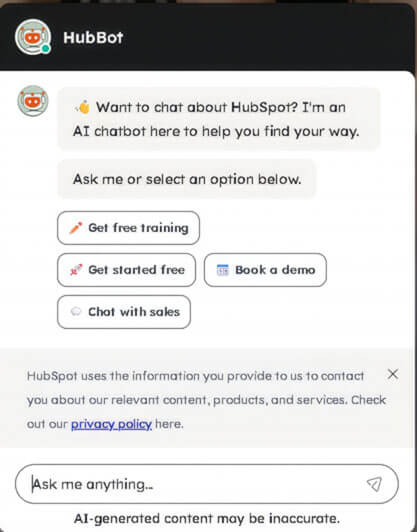
Conversational AI offers some benefits for modern sales teams. These include:
- Faster Response Times: Chatbots reply instantly, which helps capture leads when the interest is high.
- Better Lead Qualification: AI can ask pre-set questions and identify high-intent prospects before handing them to sales reps.
- 24/7 Availability: Prospects can get answers at any time, even outside working hours.
- Improved Personalization: Responses can be tailored based on user behavior, location, or past interactions.
Understanding how to use AI in sales through conversational tools will help teams communicate more efficiently with customers.
To implement chatbots successfully for customer interaction, design simple conversation flows that are easy to follow. It is also important to set clear handoff points where a human sales rep takes over when the conversation becomes more complex.
Additionally, integrate the chatbot with your CRM and sales tools so all interactions are recorded.
How to Use Predictive Analytics in Sales
Predictive analytics involves the use of data, patterns, and technology to predict future outcomes. For teams learning how to use AI in sales, predictive analytics is one of the practical applications.
Many companies already use predictive analytics successfully. Some of the use cases of predictive analytics in sales include:
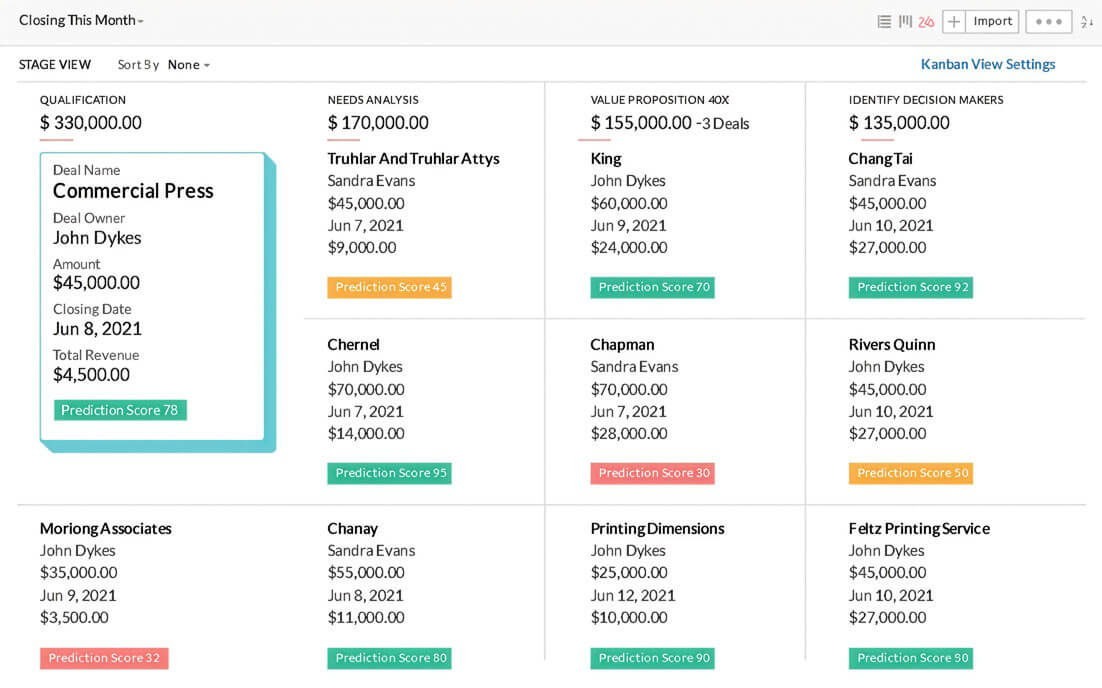
- Lead Scoring and Prioritization: Sales teams use predictive models to rank leads based on behavior and buying signals. This helps reps focus on prospects that are more likely to convert, improving win rates.
For example, with Zoho, you can predict the win probability of leads based on their data and behavior.
- Sales Forecasting: With predictive analytics, sales teams can analyze past deals, pipeline activity, and market trends to estimate future revenue flow. This makes forecasts more accurate and helps sales leaders plan targets and resources better.
- Churn Prediction: Sales teams track customer behavior and engagement levels to predict accounts that are at risk of leaving. This enables them to act early to retain these customers.
- Upsell and Cross-Sell Opportunities: Predictive tools can recommend products or services a customer is likely to buy next, based on similar customer patterns.
Here's how to use AI in sales using predictive analytics tools.
- Collect clean and accurate data from your CRM, marketing tools, and sales systems.
- Set clear goals for what predictive analytics should help you achieve, such as lead scoring or revenue forecasting.
- Choose an AI-powered predictive analytics tool that fits your sales needs and integrates with your existing software.
- Connect predictive insights into your sales workflow so reps can see them while working on deals.
- Train sales teams to use predictions when prioritizing leads, planning follow-ups, and managing the pipeline.
- Review results regularly and refine the models as more data becomes available.
How to Use AI in Customer Relationship Management
AI is changing how sales teams manage and grow customer relationships. A traditional CRM mainly stores contact details and deal stages. However, with an AI-driven CRM system, you can analyze customer activity and highlight patterns.
AI-powered CRM systems come with features that support smarter selling, such as:
- Automatic Data Management: AI captures and updates customer information automatically from multiple touchpoints.
- Action Recommendations: AI can suggest actions like sending a follow-up email, scheduling a call, or offering a product recommendation.
- Alerts and Reminders: The system notifies you when a deal is stalling or when a lead is showing signs of buying intent, so you can act on it.
- Message Support: Many AI tools help draft follow-up emails, message summaries, and notes based
on interactions. For example, Freshwork’s AI Copilot provides contextual summaries for customer service
inquiries and interactions.
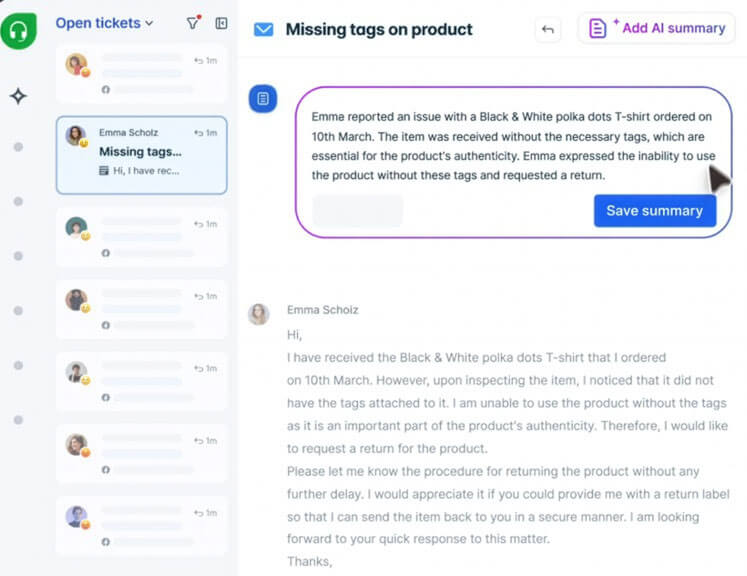
Image via Freshworks
AI helps you manage customer data better, and segmentation is one of the ways it does that. Since you can analyze customer data more accurately with AI, you can create more precise customer segments for targeted marketing.
How to Use Machine Learning for Sales
Machine learning is a branch of artificial intelligence that allows systems to learn from data and improve over time. When learning how to use AI in sales, machine learning looks at past customer actions to guide sales decisions.
One of the most common ways of using AI in sales is lead generation. Machine learning models analyze various customer data, such as website visits, email responses, social media interactions, and past purchases.
This will help you identify people who are more likely to become customers so your sales team can focus its time on these leads.
Sales teams can also use machine learning for lead management. It can score and rank leads based on how similar they are to past successful customers.
For example, if certain job titles, industries, or behaviors often lead to closed deals, the system will prioritize leads that match those traits.
Understanding how to use AI in sales through machine learning helps sales teams work smarter.
Best Practices for Implementing AI in Your Sales Strategy
When teams understand how to use AI in sales effectively, they are more likely to trust and adopt the technology.
Here are some of the best practices you can follow when learning how to use AI in sales.
- Align AI Tools with Sales Goals: Knowing how to use AI in sales starts with picking the right tools for the right purpose. Before choosing any AI tool, make sure it supports your main sales goals so it adds value to your current workflow.
- Train Your Team to Adapt to AI: Your sales reps need to understand how to use AI in sales to complete daily tasks. You can offer simple, hands-on training sessions to help them feel confident and comfortable using AI.
- Start Small and Scale Gradually: Instead of introducing many AI tools at once, start with one or two that solve your biggest challenges. Let your team get familiar with them before expanding.
- Set Clear Metrics for Success: Define what success looks like before implementing AI. This could be higher lead conversion, shorter sales cycles, or more accurate forecasts. This will help you track its impact on your business.
- Review and Refine Regularly: Monitor performance and gather feedback from your team to improve AI adoption. You can adjust tools, processes, and training as needed to ensure better results from using AI in sales.
FAQ
1. How can I start using AI in my sales process?
Here’s a simple step-by-step guide on how to use AI in sales:
- Start by identifying areas where AI can add value.
- Choose tools that integrate with your existing workflows.
- Train your team on how to use AI in sales for easier adoption.
- Begin small, measure results, and expand as your team becomes more comfortable.
2. What are common challenges when implementing AI in sales?
Common challenges include poor data quality, lack of team training, and misaligned tools. Teams may also resist using AI if they do not understand its benefits.
3. Can small businesses benefit from AI in sales?
Yes, AI is not just for large companies. Small businesses can use AI tools to automate follow-ups, score leads, and track customer behavior.
Conclusion
The sales process involves many stages and activities, so the application of AI in sales also varies. Learning how to use AI in sales allows teams to work more efficiently, close more deals, and stay ahead of the competition.
With that said, sales teams should identify tasks that benefit from AI, test tools on a small scale, and gradually integrate them into their daily workflow to boost efficiency.