Unlocking the Secrets to Raising Sales Conversion Rates
If you’ve ever looked at your pipeline and wondered why so many “promising” leads never turn into customers, you’re not alone. It’s frustrating when the interest is there, but the conversions just don’t follow.
That’s exactly what this article is here to help with: boosting your sales conversion rates.
We’ll help you understand the factors that affect sales conversion rates and best practices that can help you improve yours. So, let’s get started.
Understanding Sales Conversion Rates
Before we get into the details of boosting sales conversion rates, we must first grasp some basics. Let’s start with what it is, why it matters, and which factors influence it.
What is the Sales Conversion Rate?
Think of the sales conversion rate as a scorecard for your entire sales system. It shows how many interested people actually turn into customers.
You calculate it by dividing closed deals by total leads — simple math that reveals a lot.
It’s the closest thing you have to a “pulse check” on whether your sales approach is working.
Importance of Sales Conversion Rates in Business
A solid sales conversion rate is like having a steady engine behind your growth. It lets you plan because you know what percentage of leads will likely convert.
It also keeps your sales costs in check, since you’re getting more value out of the leads you already have.
If you want to streamline your sales process, it’s better to try and improve sales conversion rates than to acquire more new leads.
Factors Influencing Sales Conversion Rates
Here are some factors that influence sales conversion rates.
- Messaging Fit: If your message matches the buyer’s problem, they move faster.
- Qualification Process: Poor qualification wastes reps’ time and drags down averages.
- Speed of Response: Fast replies increase the chance of conversion.
- Demo and Proposal Quality: Buyers trust proposals that connect directly to their challenges and goals.
- Follow-Up Cadence: Many deals are lost simply because the rep didn’t follow up enough.
- Competition: Strong positioning helps you win deals before buyers dive too deep into comparisons.
- Pricing and Offer: Clear pricing and simple next steps reduce hesitation.
- Trust Signals: Evidence of past wins helps buyers picture their own success.
Understanding these factors helps you improve your sales process. Over time, those improvements turn into higher sales conversion rates and a stronger pipeline.
Average Ecommerce Conversion Rate for High-Ticket Sales
High-ticket items are purchases that require more thought, budget approval, or implementation planning.
They are not just “expensive”; they often change a buyer’s workflow or budget planning. These involve longer decision windows and multiple stakeholders.
Current Statistics and Benchmarks
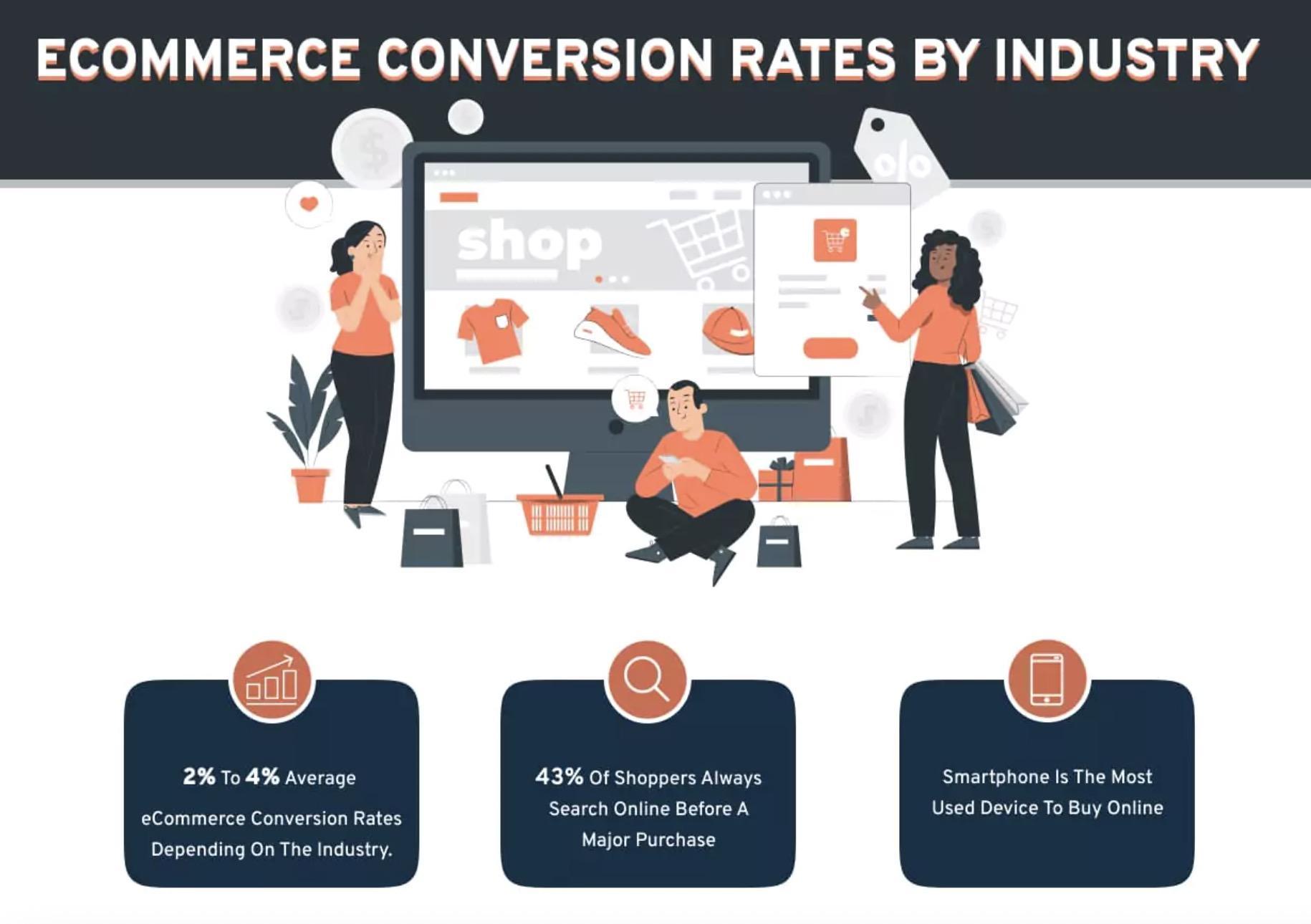
Recent industry benchmarks show that overall ecommerce conversion rates vary by industry and can average around 2% to 4%.
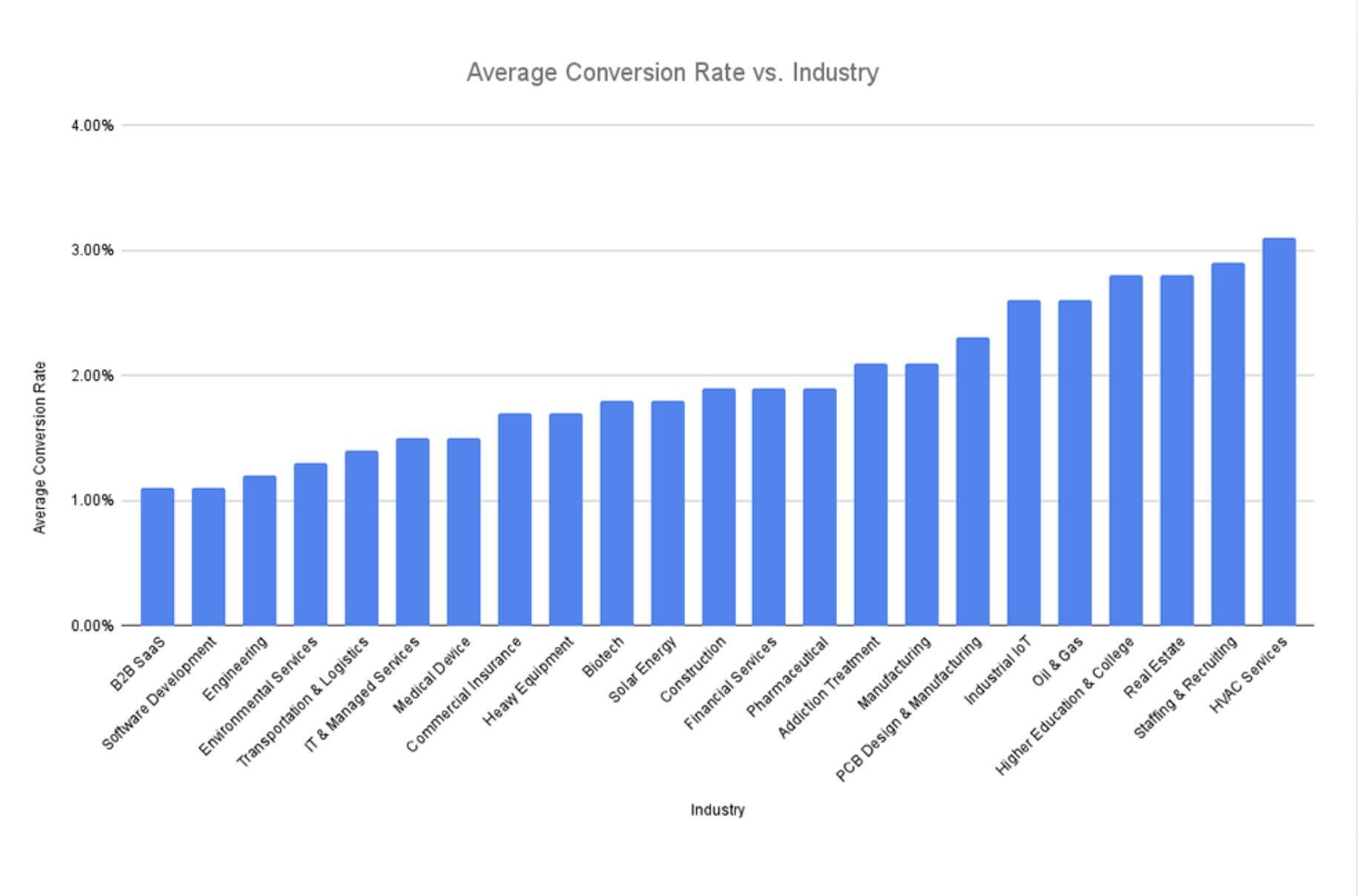
However, when it comes to B2B sales, things are a bit different. Since B2B products, such as a software solution, can change a company’s entire workflow, it is a high-ticket item. This requires more careful consideration and a longer sales cycle.
That’s why the average sales conversion rates for B2B products are a bit lower at around 1% to 3%. Here is the industry-wise breakdown.
Strategies to Improve the Average Ecommerce Conversion Rates
Using the right strategies can help you improve your sales conversion rates. Try the following ones to get started.
- Improve lead qualification. Capture intent (downloads, demo requests) and treat those leads like sales opportunities.
- Personalize product pages for fewer but deeper visits. Use tailored content, video demos, and FAQs that address enterprise concerns.
- Add flexible payments and financing. Installment plans and B2B payment terms lower purchase friction.
- Use proactive outreach. Triggered human follow-ups after a key action (pricing page view, long time on product page) convert better than passive waits.
- Test pricing presentation. Show per-month or cost-savings framing to reduce sticker shock.
- Measure sales conversion rates by cohort (channel, product price band) so you can focus on fixes where they matter most.
Sales Process Optimization
If you want to boost sales conversion rates, you need to streamline every step of your sales process. In this section, we’ll guide you through it.
How to Optimize Each Step of the Sales Process to Boost Conversions
The B2B sales process has seven key stages. Let’s see what each entails and some tips you can use to get the best results at each stage.
1. Prospecting
This is the stage where you open the first conversation with the right people.
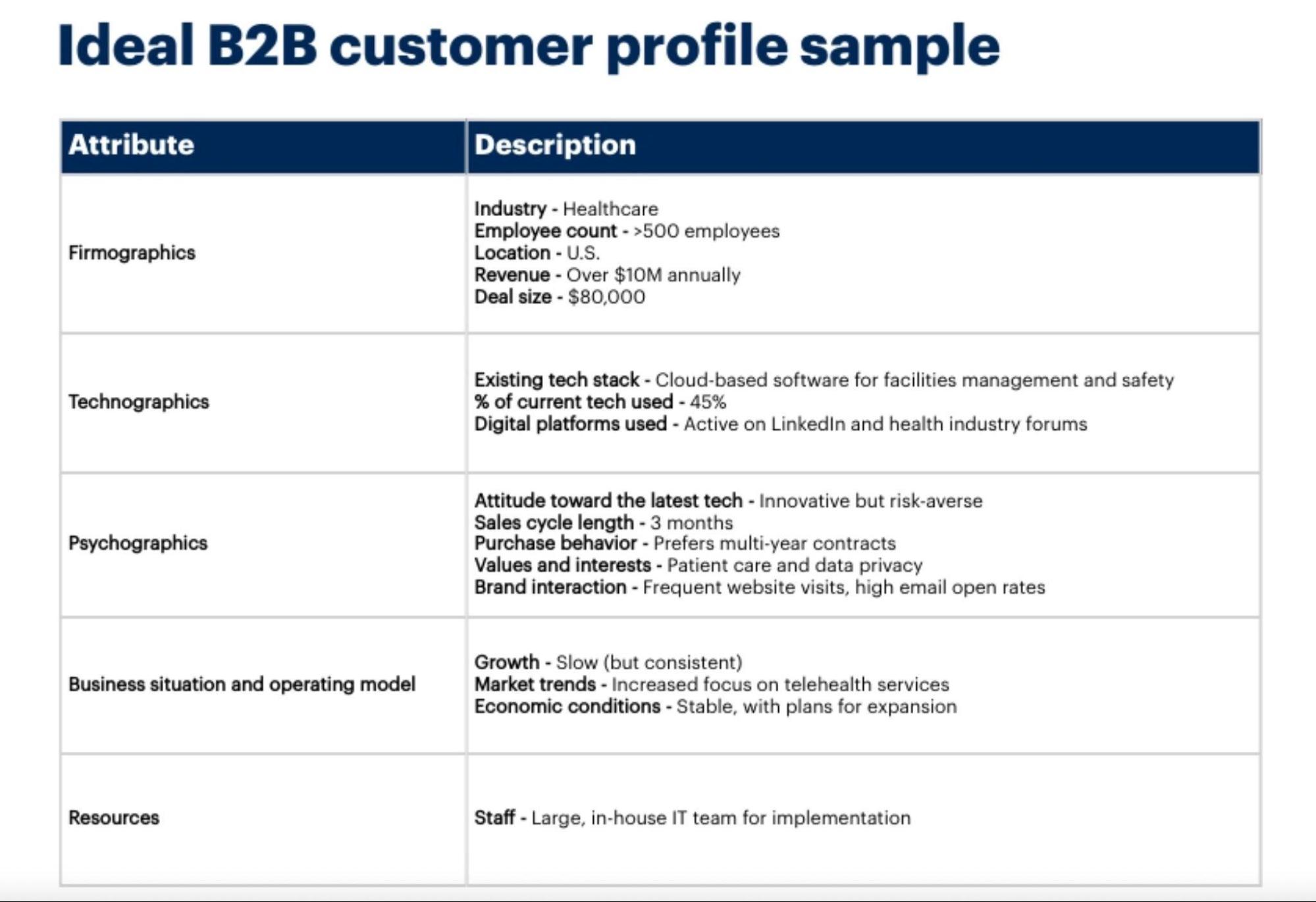
- Define an ideal customer profile (ICP).
- Use short, personalized outreach with one clear value line.
Here’s an example of a B2B ICP that will give you an idea of things you can include.
2. Lead Qualification
At this step of the process, you need to separate real opportunities from noise.
- Ask three core qualifying questions and record answers.
- Score leads on intent signals and fit.
- Tag leads in CRM with a readiness level for easy routing.
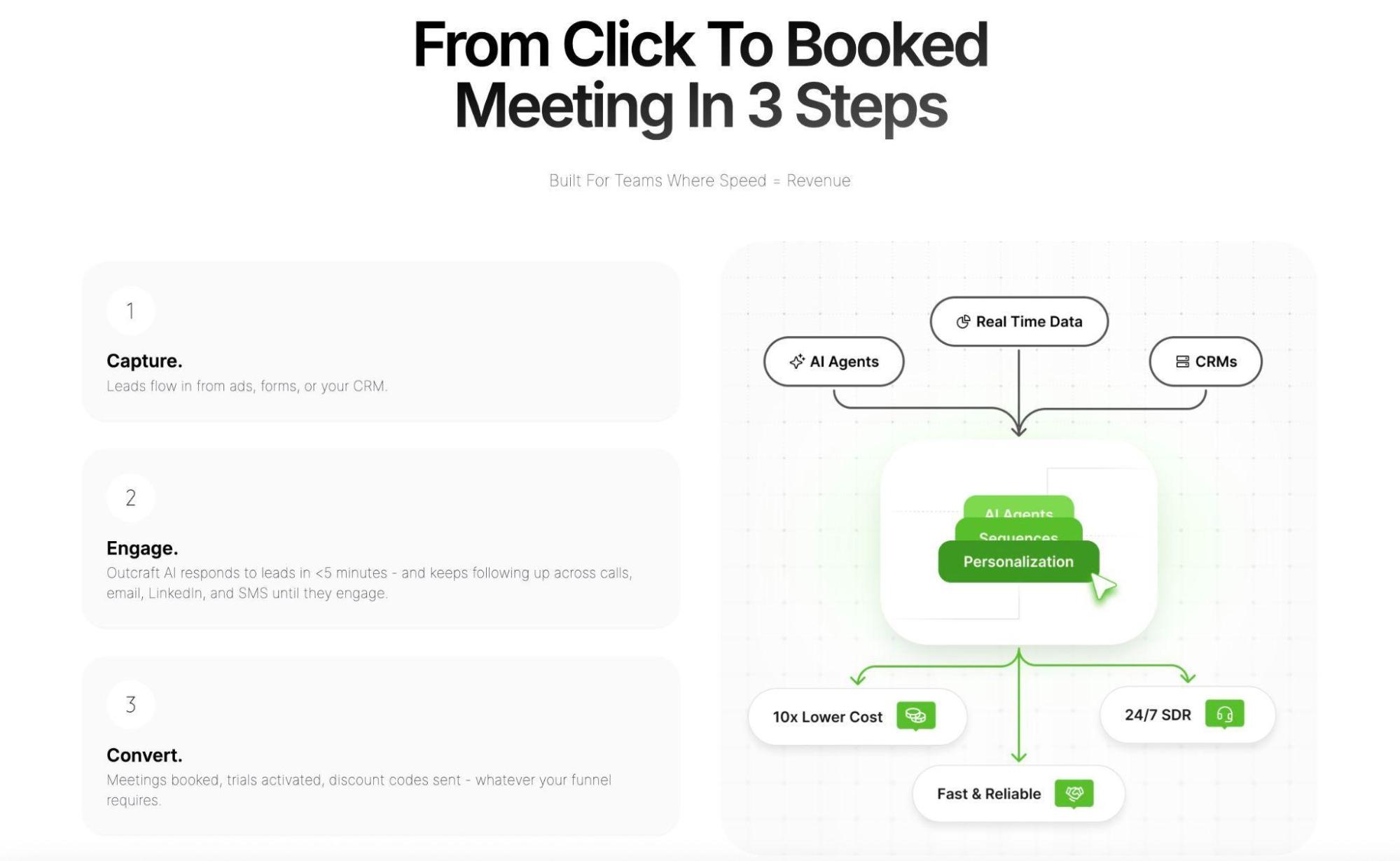
A tool like Outcraft AI can be especially useful at this stage. It can help you respond to leads quickly and nurture leads till they’re ready for a meeting.
3. Needs Assessment/Demo
This is where you need to discover the buyer’s pain points and show how your product can solve them.
- Start demos by restating the top 2 buyer problems.
- Map the prospect’s requirements to product features.
- Show 2-3 real examples or mini case studies.
4. Proposal Development
Now, you must document the scope, timelines, and price. This turns interest into a tangible offer.
- Use modular proposals and A/B test your pricing presentation.
- Track proposal open and time-to-accept metrics.
- Include ROI calculators or case study snippets.
5. Negotiation
Even if a prospect is interested in your product, they will still try to get the best deal. Negotiations help you and the prospect find a middle ground.
- Define concession boundaries before talks.
- Reframe price conversations around ROI and risk reduction.
- Offer a small pilot or limited scope to reduce buyer risk.
- Document agreed changes in writing immediately.
6. Deal Closing
At this step, you close the deal and sign a contract with the client.
- Monitor close rate and time-to-close by rep.
- Streamline legal/finance handoffs.
- Confirm onboarding time and next steps.
7. Post-Sales Follow-Up
Your job doesn’t end when you make a sale. Building a good relationship with the client and providing a great experience are ongoing tasks.
- Track time-to-value and first-success metric.
- Run NPS and feedback loops tied to renewal triggers.
- Automate milestone reminders but keep human check-ins.
Tools You Can Use to Optimize Your Sales Process
Here are some types of tools you can use to boost sales conversion rates.
- CRM: Central source for contacts, notes, and deal stages.
- Lead Enrichment: Adds firmographic and contact data instantly.
- Proposal/CPQ: Creates clear, reusable offers fast.
- Conversational AI (Outcraft AI): Engages leads instantly and qualifies them.
Best Practices to Boost Sales Conversion Rates
Think of conversion rate improvement as a set of small, surgical fixes across your funnel. Here are some best practices that can help you with that.
- Create Tailored Pitches: Tell how your product will solve a prospect’s unique problem. Show the specific outcome they care about.
- Personalize Your Follow-Ups: Use short, relevant messages that reference past conversations or actions.
- Leverage Data Analytics: Track conversion rates by stage and other key metrics to identify and improve weak points.
- Prioritize High-Intent Leads: Score leads and focus reps on the hottest opportunities first.
- Make Buying Easy: Clear pricing, flexible terms, and a short contract remove friction.
- Train Reps on Objection Handling: Role-play common pushbacks until answers feel natural.
Pick a few of these best practices and implement them. Review the results, and when you see a clear improvement, try more of these.
Future Trends in Sales Conversion Optimization
Predictive analytics is becoming the thing that helps you spot a warm lead before they even say anything. AI tools are starting to nudge you at the right moment, whether it’s time to follow up or time to step back. It makes improving your sales conversion rates easier.
Looking ahead to 2026, buyers will expect smooth, personal interactions from the very first touch. They’ll also expect quick responses across multiple channels.
The best way to prepare is to blend AI with your existing workflow. Use it to handle the routine stuff while your team focuses on real conversations.
Tools like Outcraft AI are perfect for this. You can use it to automate several tasks during the lead qualification and nurturing stages of your pipeline.
Ready to Boost Your Sales Conversion Rates?
Improving sales conversions involves understanding your funnel, personalizing your outreach, and removing friction at every step. When you do those things well, results follow.
If you’d like support with faster lead response and better qualification, Outcraft AI can take a lot of that work off your plate. Simply book a demo to find out what it can do to boost your sales conversion rates.